Thursday, July 19, 2012

Ernest Borgnine (1917-2012)

Showing his range in Marty (1955).

“The trick is not to become somebody else. You become somebody else when you’re in front of the camera or when you’re on stage. There are some people who carry it all the time. That, to me, is not acting. What you’ve gotta do is find out what the writer wrote about and put it into your mind. This is acting. Not going out and researching what the writer has already written. This is crazy!”

Playing with knives in From Here to Eternity (1953). 

“The greatest compliment I ever had in my life was one day, I was talking to Montgomery Clift. We were sitting all by ourselves in an empty studio, and we saw a door open. And a man and a woman walked in. We paid no attention. We went right on talking. And suddenly I was engulfed in these huge arms. And the voice said, ‘You’re the son of a bitch I wrote about when I wrote that book.’ [From Here to Eternity] And it was James Jones himself. And he said to me, ‘Keep at it, kid. I love what you’re doing.’ ” (interview with Dan Lybarger)

Playing with pitchforks in Violent Saturday (1955).

“Spencer Tracy was the first actor I’ve seen who could just look down into the dirt and command a scene. He played a setup with Robert Ryan that way. He’s looking down at the road, and then he looks at Ryan at just the precise, right minute. I tell you, Rob could’ve stood on his head and zipped open his fly and the scene would’ve still been Mr. Tracy’s.”

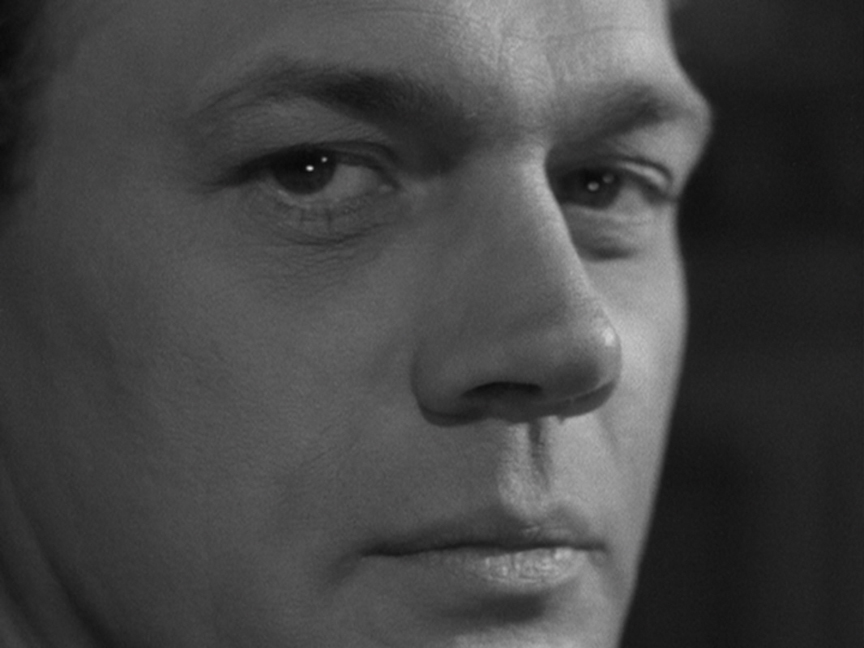
Showing one of his badass faces.

“I hate hippies and dopeheads. Just hate them. I’m glad we sent them off to war. They came back with a sense of responsibility and respect. We should have grabbed the women, given them a bath, put a chastity belt on them, and put them in secretary school.”

Giving Lee Marvin the business in Emperor of the North (1973).

“Where can we find the great actors we had yesteryear, guys like Spencer Tracy and Gary Cooper and Edward G. Robinson? You know, I was talking to Lee Marvin the other day and we agreed that we were the last of a breed. We’re the last who had the opportunity of working with these fine actors. I feel very humble. It makes me feel that I’ve got to try that bit harder.”

Keeping cool on the set of The Wild Bunch (1969).

“Everything I do has a moral to it. Yes, I’ve been in films that have had shootings. I made The Wild Bunch, which was the beginning of the splattering of blood and everything else. But there was a moral behind it.”

My favorite Ernest Borgnine films: The Mob (1951), From Here to Eternity (1953), Vera Cruz (1954), Bad Day at Black Rock (1955), Violent Saturday (1955), The Vikings (1958), The Dirty Dozen (1967), Ice Station Zebra (1868), The Wild Bunch (1969), The Poseidon Adventure (1972), Emperor of the North (1973)

Thursday, July 5, 2012

Agnes Moorehead (1900-1974)

The actress whom Orson Welles said could play anything.

“Acting is a difficult and sometimes a discouraging, sorrowful profession. It’s also the most ephemeral of the arts. A painter can preserve his work, but an actor cannot. Even motion pictures come and go.” (interview with Ronald L. Bowers)

Magnificent with Joseph Cotten in The Magnificent Ambersons (1942).

“Of course I wanted to play the Stanwyck part in Sorry, Wrong Number. It had been written for me by Lucille Fletcher, and I must have done it on radio about 18 times. I went to Hal Wallis at Paramount when they were casting it to put my hat in the ring, but he said he owed Barbara a picture and that I could have a supporting role. I said no. I’m not bitter about it, I let the chips fall where they may and go on from there.... They played my recording constantly on the set.” (interview with Ronald L. Bowers)

Cousin Lily in Summer Holiday (1948).

[On Method acting] “The Method school thinks the emotion is the art. It isn’t. All emotion isn’t sublime. The theater isn’t reality. If you want reality, go the morgue. The theater is human behavior that is effective and interesting.”

Soon to receive comeuppance from Humphrey Bogart in Dark Passage (1947).

“Materialism has brought about confusion and decadence. The youth of today have their eyes open to what harm has been done by measuring a man by the size of his bank account, and I feel sorry that so few of them know where to turn because they have lost respect for those closest to them.”

The malevolent Countess Fosco in The Woman in White (1948).

[On transitioning from radio to television] “I never thought anything about it. There are lots of times that you can’t make the change from the stage to the pictures, or from the pictures to the stage.... The only thing that I feel is the difference is the fact of the medium being either small or large. But as far as emotional values are concerned, there’s no difference at all. The playing isn’t different.” (1971 radio interview with Chuck Schaden)

 Dispensing tough love to Eleanor Parker in Caged (1950).

[On her most challenging role] “They’re all challenging. I don’t know a role that isn’t challenging.... If it isn’t a challenge, why do it?” (1971 radio interview with Chuck Schaden)

Sam and Endora bewitch a TV generation.

“I’ve been in movies and played theater from coast to coast, so I was quite well known before Bewitched, and I don’t particularly want to be identified as a witch.” (1974 New York Times interview)

My favorite Agnes Moorehead films: Citizen Kane (1941), The Magnificent Ambersons (1942), Journey into Fear (1943), Dark Passage (1947), Caged (1950), Magnificent Obsession (1954), Hush...Hush, Sweet Charlotte (1964)

Tuesday, June 26, 2012

Neville Brand (1920-1992)

A beautiful mug.

“With this kisser, I knew early in the game I wasn’t going to make the world forget Clark Gable.”

Rumpling Edmond O'Brien in D.O.A. (1950).

[On playing villains] “I don’t go in thinking he’s a villain. The audience might, but the villain doesn’t think he’s a villain. Even a killer condones what he’s done. I just create this human being under the circumstances that are given. I don’t think he’s a villain. Everybody just condones his own actions.”

Abetting Lee Van Cleef in Kansas City Confidential (1952).

[After Don Siegel awarded him the lead in Riot in Cell Block 11] “There’s only one way to thank you. I’m going to play Dunn — shit, I am Dunn.” (From A Siegel Film)

Giving Whit Bissell a close shave in Riot in Cell Block 11 (1954).

“Riot in Cell Block 11 is based on truth. I had the role analogous to Earl Ward, who was responsible for the riots in a Michigan prison last year. This convict was admired by his fellow inmates. Our producer, Walter Wanger, took us to Folsom Prison, and we encountered much trouble and lack of cooperation from the cons. But then they realized that we were trying to represent some of the good things that came out of the riots, and then they backed us all the way. I found that homicidal psychopaths run the prisons, and it is absolutely necessary for segregation into types. A majority of the cons are not criminals in the true sense of the word, and hence they should not be put into association with habitual criminals. I studied many books on crime to be able to play the part convincingly, but when we arrived at Folsom I realized that they were human beings, so I just acted as Neville Brand.” (1955 interview with Jerry Pam)

Playing games with Inger Stevens in Cry Terror (1958).

“I look at the pretty boy actor as a mass-produced item as opposed to the ugly one as a special order. Take me, for instance. Somebody at a party told me once that my face looked as though the entire Russian army had conducted a three-day battle on it in mountain-climbing boots.” (Brand as guest columnist in the June 9, 1966 Citizen-News)

Channeling Al Capone in The Scarface Mob (1959).

“Guys like me will be around this town a lot longer than the pretty boys because we are — like the specialty items in the auto business — special models, unique and one of a kind. Nobody forgets our faces once they’ve had a good look at ’em. We may produce nightmares instead of pleasant dreams, but we aren’t forgotten.” (Brand as guest columnist in the June 9, 1966 Citizen-News)

Creeping out Anjanette Comer in Death Stalk (1975).

[On being wounded during WWII] “I knew I was dying. It was a lovely feeling, like being half-loaded.” (1966 TV Guide interview with Arnold Hano)

Finally a good guy: Reese Bennett on Laredo.

[On his drinking] “The booze became medicine, man. Suddenly you’re not drinking to get drunk anymore. And the only way you can hit the morning — I used to call that just getting even — is to grab that jug. I’d have a pint of whiskey in the morning just to make a phone call.” (1975 Los Angeles Times interview)

My favorite Neville Brand films: D.O.A. (1950), Where the Sidewalk Ends (1950), Kiss Tomorrow Goodbye (1950), The Mob (1951), Kansas City Confidential (1952), Stalag 17 (1953), Riot in Cell Block 11 (1954), Cry Terror (1958), The Scarface Mob (1959), The George Raft Story (1961), Birdman of Alcatraz (1962)

Sunday, June 24, 2012

Tom Ewell (1909-1994)

The sardonic everyman.

“Marilyn didn’t think she was any good. She suffered from a tremendous inferiority complex. It was very difficult for her to show up on a set. More difficult for her than for anyone I’ve ever worked with. She wanted so desperately to be good that she found it hard to do even the smallest scene. She used to vomit before she went before the camera.” (1979 interview with Charles Higham)

The lecherous everyman in The Seven Year Itch (1955).

“Jayne Mansfield was quite different. She was devoted entirely to her own publicity. We appeared together in The Girl Can’t Help It for the director Frank Tashlin, who had a marvelous cartoonist’s eye. The studio was trying to create another Marilyn.” (1979 interview with Charles Higham)

Working his mojo on Jayne Mansfield in The Girl Can’t Help It (1956).

“I’ll never forget the first day Jayne and I met, which was also the first day of shooting. Jayne was wearing a dress which was too tight to walk in. Mickey Hargitay, who was married to her, had to carry her on to the set over his head like a suitcase. She was stiff as a board! He deposited her on the sound stage, and she stood up like a shop dummy. I’ll never forget it. She’d be looking over my shoulder in the middle of a scene. I assumed she was looking at Mickey. There was love in her eyes. Well, I snuck a glance around, and she was gazing into a full-length mirror! I couldn’t believe it.” (1979 interview with Charles Higham)

Enjoying The Great American Pastime (1956) with Anne Francis.

[On his character in The Seven Year Itch] “Well, I’m going to be completely honest with you. Billy [Wilder] and I didn’t see eye to eye on the film. I had worked in the [Broadway] show for about three years, and so I felt I knew what George [Axelrod] wanted ... for the play. He [Wilder] wanted the part broader than it was in New York. And I felt what George had done was capture something very real.... Elliot [Nugent] was a co-producer of the play, and his son-in-law was the director of the play. And he agreed with me that this man was very innocent.... Maybe he had a twitch or two, but he had never strayed from the fold, and had never really had the itch to such an extent.... So the whole thing had a certain real quality to it. And I just felt that, knowing George, and how he was, that any kind of coarsening of the part, any kind of actual leer ... and Billy wanted the leer in the film. And I fought him.” (undated interview)

With Jean Hagen, as an adulterous husband in Adam’s Rib (1949).

[When asked by Dorothy Kilgallen if he was tall, dark and handsome during a 1955 taping of What’s My Line] “Alas, no.”

Giving hope to lovable schnooks everywhere.

[Responding to Kilgallen’s facetious claim that 20th Century Fox was giving him Tyrone Power’s dressing room] “I’m glad to hear that, Miss Dorothy. As a matter of fact I always read your column, so I’ll be expecting to see that tomorrow.”

Saturday, June 16, 2012

Broderick Crawford (1911-1986)

The essence of fifties masculinity.

“My trademarks are a hoarse, grating voice and the face of a retired pugilist — small, narrowed eyes set in puffy features which look as though they might, years ago, have lost on points.”

Dispensing justice in The Mob (1951).

“You get lost for years inside this business. You watch people making mistakes about you and there’s nothing you can do about it. They told me out here I wasn’t the type to play Lennie in the picture [Of Mice and Men, 1939], so I became a B-picture thug at Paramount, for years, working with Lloyd Nolan and J. Carrol Naish, who were also lost, who were as talented as actors get, and who cared?” (1956 article in Pageant)

As Chief Dan Mathews on TV’s Highway Patrol (1955-1959).

“...back in the days when I was really learning my trade, I could ride on the subway and study people for a day at a time, and remember the little things, movements and moods that made me understand some man I’d never see again. All that went into my memory, and I could call it up when I needed it. That may be a kind of technique. And the rough time you have when a character is soaking into you, and making you inarticulate, heavy, dumb, until he grows big and firm enough inside you to take over.” (1956 article in Pageant)


Eyeing his Academy Award for All the King’s Men (1949).


“I’m a happy fella. I work, I play. I do what I want to, practically. I like a few people very much. I like to roam around with them. Very much. A few bucks in my pocket, the phone rings, off we go. The bullfights in Tijuana, Vegas, the beach. I like all kinds of exercise. There are games a guy can play for years and years.” (1956 article in Pageant)


Under Neville Brand’s gun in The Mob (1951).


[On Hollywood parties] “I don’t go to them anymore. When people tell you they saw your last picture, well, the way they say it sounds like they hope it was.” (1957 article in TV Guide)

Having a smoke in between saying “10-4.”


[On Highway Patrol] “They told me what they had in mind and in five minutes I knew it was for me. Frankly, I was glad to go on the side of the good boys for a change. I had had enough of playing gunmen, goons, morons and meatballs.” (1959 article in Men Only)


Asserting his authority over William Talman and Ralph Meeker in Big House U.S.A. (1955).


“F*** with me and you’re f***ing with dynamite. My mother always said be ready, so I start the night before. My father, who broke my nose the first time because I failed to call him ‘sir,’ told me, ‘Son, in a bar or a theater, always look for the exit — and hold it down to beer when working. But when it’s cocktail time, stand back!’ ” (1971 article in TV Guide)


Looking deceptively benign.


“I got it figured. Now write this down, it’s a prepared statement like Nixon. You live your life, I’ll live mine. I’m too young for Medicare and too old for broads to care. I collect antiques. Why? Because they’re beautiful. The prop men can see me coming. They know I’ll steal anything with a mark on it.” (1971 article in TV Guide)

My favorite Broderick Crawford films: Black Angel (1946), All the King's Men (1949), Convicted (1950), The Mob (1950), Born Yesterday (1950), Scandal Sheet (1952), Down Three Dark Streets (1954), Big House U.S.A. (1955), New York Confidential (1955), Il Bidone (1955), The Fastest Gun Alive (1956), Convicts 4 (1962)

Wednesday, June 13, 2012

Joseph Cotten (1905-1994)

Talented beyond a shadow of doubt.

“Orson Welles lists Citizen Kane as his best film, Alfred Hitchcock opts for Shadow of a Doubt, and Sir Carol Reed chose The Third Man — and I’m in all of them.”

With Anne Baxter in The Magnificent Ambersons (1942).

[On Orson Welles] “I don’t know why people regard him as a difficult man. He was the easiest man I ever worked with. And the most inspiring. Contrary to what’s been said, Orson as a director was very realistically aware of the limitations of his players. He would never lead them into a position of trying to achieve what they couldn’t.” (1973 interview with Derek Malcolm)

Smooth as silk.

“My wife told me one of the sweetest things one could hear: ‘I am not jealous. But I am truly sad for all the actresses who embrace you and kiss you while acting, for with them, you are only pretending.’ ”

With Orson Welles in The Third Man (1949).

“I was a so-called star because of my limitations, and that was always the case. I couldn’t do any accents. So I had to pretend. Luckily I was tall, had curly hair and a good voice. I only had to stamp my foot and I’d play the lead — because I couldn’t play character parts.”

Acting appropriately in Journey into Fear (1943).

[On copying Robert Brackman, who painted the portrait used in Portrait of Jennie] “On my first try at a faithful imitation of Mr. Brackman, the technical director was on his feet, crying, ‘No, no, no, please, please — no artist was ever guilty of such overacting.’ I said, ‘The man who painted this picture did exactly that.’ I looked to [William] Dieterle, who said, ‘Joseph, I must admit, it looks a little broad. Although I’m sure it’s authentic, it is, I’m afraid, another example to prove how difficult it is for art to copy nature.’ I demonstrated more of Mr. Brackman’s idiosyncrasies, which drew tolerant smiles from Dieterle, sneers from the technical director, and a stony silence from the crew, most of them old friends.”

Romancing Jennifer Jones in Portrait of Jennie (1948)

[On Hush...Hush, Sweet Charlotte] “I think we all wanted it to be a different picture than it was, especially Joan [Crawford]. She felt Bette [Davis] wasn’t trying enough to lift the script up to their level instead of simply playing down to it. She never came right out and said it to me, but I could see it on her face. Joan wanted it to be a ‘quality’ picture. I think the movie works well enough for what it is, but it’s no Gone With the Wind or anything resembling a true ‘quality’ picture.”

Sorely missed.

“In Hollywood, those stars who have been around a long while and seem to grow better with time are the ones who regard ‘stardom’ merely as an opportunity to grow.”